Monday, February 24, 2020

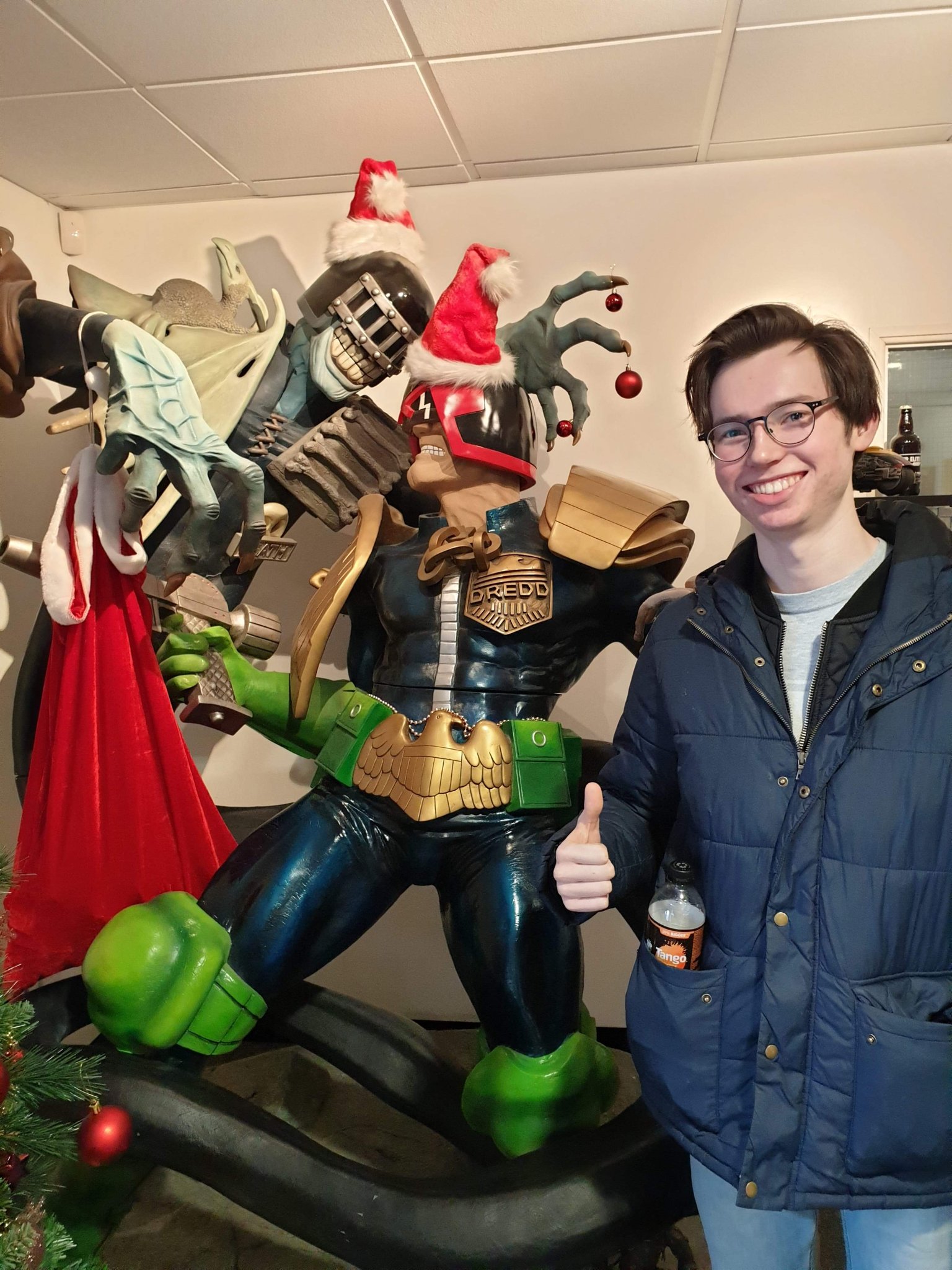
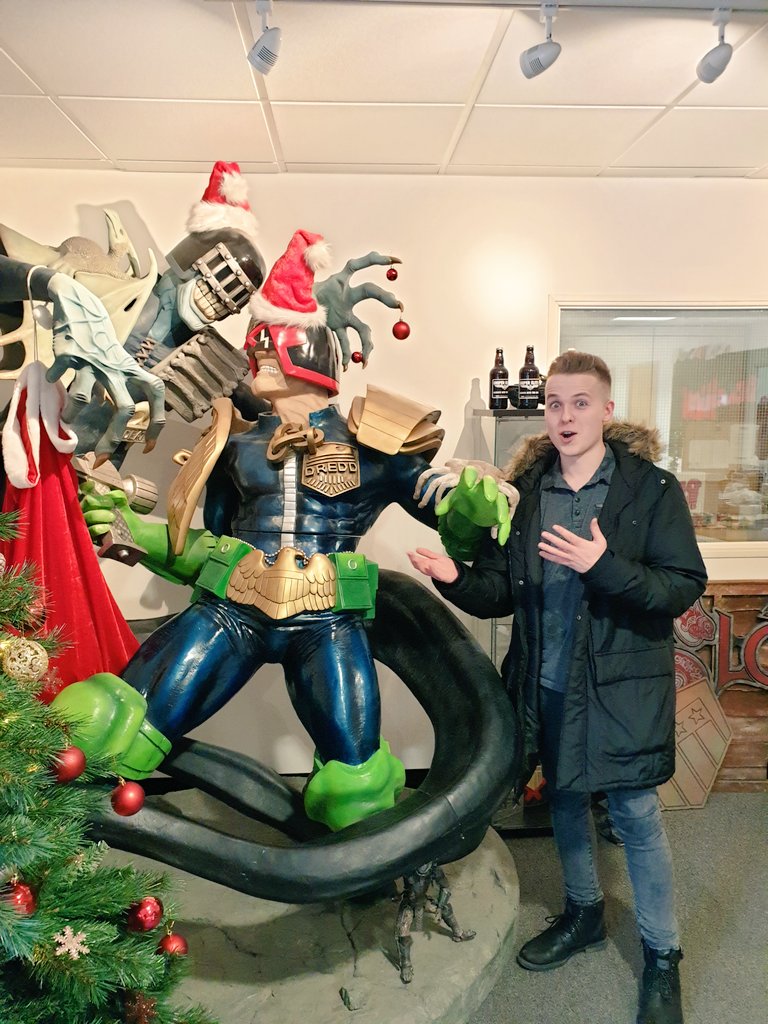
Third Year Games Design Students Chosen For Placement At Rebellion Oxford.

Very excited for our third year games design students, Jacob Simpson and Scott Hamilton as they head down to Oxford for their visit to @Rebellion.
With a 5.30 am start, he guys wrote on Twitter:
'Up bright and early with @SHGameDesign to go down to @Rebellion, only a 3 and a half hour train each way. Regardless, somehow we're still hyped beyond belief and ready to go! See you soon!'

Image


Many thanks to the guys at Rebellion for making this possible and also special thanks to Saija Wintersun who attended the big UCLan CJam event to interview and identify students for this opportunity.

Image


Jacob and Scott were so happy to have this opportunity which really helps them to connect with industry and is so inspiring for them as designers.
Huge thanks to the designers at Rebellion for spending time with them. Both found it a very valuable experience and were pleased to meet such great people from the industry.


Image

Image


Our Uclan Games Design Course was excited to take part in cJAM: Media during Nov 2019! We were so proud to welcome our Alumni @UCLanJMP, Saija Wintersun, now Senior Environment Artist at @Rebellion, Oxford.
cJam at UCLan is a vibrant showcase event that enables our talented students to meet face-to-face with senior industry professionals, to share ideas, make connections and pitch for opportunities. cJAM events are hosted by the Faculty of Culture and the Creative Industries and the objective of today is to give our students the opportunity to win placements that will help launch their careers. It is so important that our students understand the pace of change within the different media sectors, how digital technology is affecting the industry, and the best career opportunities open to them. 


Sunday, February 23, 2020

Storium Basics: Creating A Character / Applying For Games

Welcome back to Storium Basics. This series of articles is designed to help new players understand Storium in general, and be able to get started on Storium games. For those looking for more, see my more advanced article series, Storium Theory.

Today, we're taking a look at the first thing a player will need to do to get involved in a game: creating a character.

Once you've found a game that you'd like to join, whether through the Browse Games feature, the forums, or some other method, what should you expect to happen, and what should you do?

First, a bit about how narrators set things up:

The system a lot of narrators - myself included - will use for open invitation games is to take applications up until about the end of the default two week application period, then look over all the applications and choose the ones they feel will work best for their game. They'll certainly comment on applications before that point and will let you know if the character just outright doesn't work, but you often won't hear a definitive yes or no until the application period nears its end.

There are exceptions, of course - sometimes your character is just so clearly right for the game that they take it right away, or of course sometimes you're specifically invited to a game—but that's how that style works.

Note that some narrators also use the "Open Lobby" feature of Storium or forum topics to let players discuss character options and ask questions in a place specifically set aside for the game as well - I tend to just take applications, myself, but a lot of narrators love using that feature and if one does, you should certainly feel free to ask questions there! Even if they don't, you can usually ask questions via private messaging. Make sure that you understand the world and the game concepts if you're fuzzy on anything.

Remember, though - whether you are talking to the narrator in the Open Lobby, on the forums, through private messaging, or through any other method, do not construe the narrator saying that it is all right to apply with a particular character as the narrator saying that they will definitely approve a particular character. Narrators will often be willing to help you work through applying for a character or iron out a character idea, but until they actually hit "approve" on your character application, you do not have their approval.

Now...how do you actually apply?

I look at Storium applications as…kind of a job application, honestly. A fun one, but still, the idea as a narrator is to pick out people you're willing to be writing with for potentially several months to a year - these games can last a while, even if they sound short to begin with. You want to get a cast of characters that seems like it can work together, and do your best to pick a group of players that seems like it can gel pretty well.

It's in your interest as a player applying for games to look at things from that perspective too. You need to sell both your character and yourself - your character as an interesting element for the story, and yourself as a player who will be active, reliable, and easy to work with.

So, here are a few things I've found can help you be more likely to be accepted for a game:
  • Provide a character picture.
    • Narrators like to see those—it helps show that you've thought about the character more, and honestly just gives a good "at a glance" for the character's appearance and general mood or theme. 
    • Don't worry about getting this exact, necessarily - you don't need to go build your character in an art program or get it commissioned or anything. 
    • There was a good forum topic a while back where someone - I forget who - said that he looked at it as kind of "casting the part" as though this were a movie or some such - he looked less for an exact appearance match and more for a picture that fit the general mood and tone of the character.
    • If you cannot provide a picture for your character - for instance, one player I play with is blind and therefore cannot - then just make sure to state that you could not in your comments along with the application. Narrators will generally be understanding, but it's important to let them know that there was a reason.
  • Card art isn't as required, generally, but do pay attention if the narrator specifically asks for it. Narrators don't like having their instructions ignored.
  • Take some time on the background - you don't have to (in fact, you shouldn't) spell out every detail of a character's life, but there should still be a perception that you know, in general, who the character is.
  • Involve your character in the world. 
    • If the narrator calls out particular kingdoms or locations or tribes or what-have-you, consider having your character be from one of those places, or having run into people from those places. 
    • If he mentions events, particularly disastrous ones, consider having those events influence your character's background.
    • Above all, try to fit your character into the game's world and the game's tone or mood, or be ready to explain why your character can still fit the game despite the differences. Characters that clash with the game's tone or world can sometimes work, but they will make narrators skittish - it is on you to explain how your character can still fit the game.
  • A lot of players will submit characters they played elsewhere, and that's totally fine - I've done it myself with old MUX characters or tabletop characters - but make sure to make that character fit into the story's world all the same, likely with the above methods.
  • You don't have to be perfect (though there are some sticklers for grammar rules on Storium that will say otherwise), but do take the time to do what you can to make your writing clear. 
    • In particular, split your background up into paragraphs (and when you do, hit enter twice to clearly separate them - believe me, it makes it so much clearer). It makes it easier to read, and narrators like to know that they're going to have an easy time reading your posts.
    • Take a little extra time with your app - and with your writing on Storium in general. Again, you don't have to be perfect. Just make it clear that you do care about your writing.
  • Put things into your background that the narrator can use. You don't have to spell them out as bullet points or anything, but characters that provide the narrator with possibilities are more exciting than those who just are what they are. 
    • Leave some mystery in there, or imply that a person that hurt you was involved with some evil force or another the narrator established in the game description.
    • Narrators, by and large, love to have little cues that they can find in a character's description or background. It helps them involve the character more in the story, and make the story about the characters, rather than about events that the characters happen to be involved in.
    • This is a good thing to use comments for as well - when you submit your character and that little box comes up with additional comments, take the time to just briefly talk about some ideas for how the character might tie in to the story, or call out bits in your application that you've intentionally left open for the narrator to use.
  • Take a look at the other existing apps and try to make your character feel different. 
    • If other people are choosing a particular nature, strength, weakness, or subplot, it's a good idea to pick a different one. Storium may not have a tactical need to have different "classes" in your party, but narrators like to have characters that are different from each other. 
    • Work on differentiating Strengths, Weaknesses, and Subplots as well. A game with three people who all have Agile as their Strength card is simply not as fun to read as a game where those three people have different Strength cards. There are definitely story possibilities with overlap, but most narrators I've seen will prefer characters that differ over those that are similar.
  • Write your character as someone who can and will get involved with the story and the other characters. 
    • Characters who feel like they'll want to be separate from the rest of the group a lot of the time (loners, "I work alone" types), or those who feel like they won't care about the story or will actively act against the story (for instance, a totally sensible character in a slasher flick game, who won't go to explore the creepy old house) will make the narrator nervous. 
    • Remember: You are writing a character for this story. Your character doesn't have to be fated to be a hero or something like that. He doesn't have to be thrilled about what he's going to be doing. But, deep down at the very least, he should be the sort of person that will pursue the activities the story demands.
    • If your character appears to be the sort of person who would run screaming in the other direction from the events of the story or otherwise avoid participating in it, take the time in comments to tell the narrator how you'd like to tie the character to the story more firmly - or at least to give the narrator a few ideas for how it might happen. As above, it is on you to explain why a character that doesn't seem to fit can actually fit.
  • Pick the starting cards for your character based on what you want to see come up in the story for that character - not just based on what sounds right for the character. You need to pick starting cards that feel like things that would be interesting to you - things you are going to want to play. 
    • This tends to matter most for Weakness cards, but can also be a factor in choosing a Strength or Subplot. Pick something that interests you and that you want to see as part of the story.
    • I've seen players pick stuff because it "sounded right" or because it was who the character was before the tale, not thinking about where their character's story was quickly going to go and how they actually wanted to portray the character, and it always becomes something frustrating for the player then.
  • Finally, for yourself, try to build a good reputation in general. Narrators can, and do, look at your play history. If they see interesting characters, story participation, group interaction, a good attitude, and completed games, they'll look forward to the possibilities presented by having you in their game.
Narrators aren't professionals and we all work a little differently, and nothing's a guarantee, but the above should generally help you be more likely to be accepted to games, and just help you have more fun and help others have more fun when you're in them.

If you would like to know more about character creation and applying for games in Storium, here are a few of my Storium Theory articles on that topic:

Thursday, February 20, 2020

Top 7 Interesting Facts, Tips, You Need To Know About Assassin's Creed Odyssey | Pro-GamersArena


Assassin's Creed Odyssey has at long last arrived, And this one additionally is cherished by gamers and if the surveys are any sign, you'll likely need to play it. In spite of being another progressive passage in Ubisoft's about yearly arrangement, Assassin's Creed Odyssey has figured out how to bring enough new frameworks and stuff to befuddle new and veteran players. 

Related Article: Assassin's Creed Review, Gameplay.

There's a considerable measure to do in this one, and not every last bit of it is simple. While Assassin's Creed Odyssey pursues a sensible trouble bend, there are as yet a couple of things you can do to help streamline your 50 or more hour trek through Greece.  

So here Pro-GamersArena has compiled the top 7 Interesting Facts, Tips, you need to know about Assassin's Creed Odyssey before playing.


1. You better Choose Exploration mode instead of Guided mode. (Tip)


In Origins, the rash of unattractive, covering map symbols had been diminished by a lot, yet in Odyssey, it's gone altogether. Rather, the amusement offers you a decision comfortable start: would you like to play in "Exploration" mode or "Guided" mode? Guided mode is the Assassin's Creed maps as you've constantly known them, while Exploration strips away relatively every symbol, leaving a wonderful, clear guide reasonable for well known guide exercises like route. Rather, delineate are supplanted with bearings: the scoundrel camp is on the eastern bank of Kephallonia; the Spartan post is north of Mount Geranaia. Which appears to be extremely fascinating and extraordinary while playing. 

Antiquated Greece is huge. Each method of transportation has a type of auto-run highlight that truly proves to be useful. On horseback or by walking, squeezing Z will get your character running so you can grasp your hands off the console, while Space Bar does likewise for water crafts. Steeds, specifically, are reasonable for this: hold Z for a minute and after that press E, and your steed will auto-pursue streets to explore directly to a guide marker. In any case, it doesn't imply that you depend on that as I would prescribe you to utilize it just when fundamental however I am certain that you will scarcely utilize the alternative as you wouldn't wanna miss anything of excellent Greece. 


2. You get to choose to play as one of two characters. (Fact)


Ubisoft Quebec's last game in the arrangement, Assassin's Creed Syndicate, let players control a couple of twins, Jacob and Evie Frye. You're ready to control a male or female legend in Odyssey, however you won't skip between them as the story pulls you forward. Rather, you play as either Alexios or Kassandra toward the begin till the end. While there are some inconspicuous contrasts in their exhibitions and how the voice on-screen characters convey their lines, you don't have to struggle with the decision from any waiting feeling of FOMO. 

"Everything is open for the two characters," says innovative chief Jonathan Dumont. "It's considerably more of a recognizable proof for you, for how to relate and associate with your character. That is the reason you have the decision." Unlike Jacob and Evie, who inclined toward battle or stealth, players can shape their character as they see fit. On the off chance that you need Kassandra to crush faces in with a club or have her adhere to the shadows, it's your call.

Regardless of who you ultimately choose, your role in the world is the same.


3. Use Sparta Kick to punt high-level enemies off anything tall (Tip).


Now and then, you will confront foes which are extremely intense or hard to execute as the foe may have an Elite modifier or a harmed hatchet or some damn thing that can truly make it difficult to slaughter them. I'll cut and wound them all I need, however my individual assaults simply don't do much harm. The best activity here: kick them off a cliff. Oh Yeah !!!  

That's how you do it !!!
One of the main capacities I opened was the Sparta Kick, an "legendary kick" that indulgences adversaries in reverse. Above all, the Sparta Kick is amazingly fulfilling to utilize. When, I was in a contributed fight a marble quarry when an abnormal state, world class Spartan officer came smashing down on me. Urgent, I kept running up the laborers' platform, wavering hazardously over the abyss of the open quarry pit. At the point when the leader ascended to slaughter me, I kicked him off. Sword: 300 harm. Kick: 600 harm. Falling a few hundred feet to his demise: 20,000 harm. 

Get Assassin's Creed Odyssey at a discounted price from Amazon.


4. Use fire to damage more.


There's an extremely forceful fire framework affecting everything in Odyssey which I will recommend you to use, as adding fire to your assaults is an insightful move. As it not just include consuming harm that stacks after some time but at the same time it's excellent group control. A few foes break and run when they're hit with flame, so in case you're amidst a significant battle, lighting everybody ablaze can disperse the horde a bit. 

Hitting somebody with a flaming sword, while cool, won't consequently set them ablaze. There's a fire development detail that is unique in relation to foe to foe and may even rely upon what sorts of shield they're wearing. It takes a couple of hits of fire to extremely set somebody consuming. On the off chance that you need to benefit from your searing assaults, search for inscriptions or rewards that expansion "fire development." The higher your fire development detail is, the quicker you'll set your objectives ablaze.


5. Islands Of Adventure (Fact)


Our hands-on experience occurred on a couple of islands, Delos and Mykonos. It included a little more than twelve unique missions, led on a shockingly convoluted questline. It took around five hours to see that storyline through to culmination. "We needed to reflect what it might feel want to be on the odyssey of Odysseus, where he goes on islands and he doesn't realize what he will discover," Dumont says. Ubisoft Quebec needed players to experience an assortment of littler, local storylines amid their voyages, while additionally conveying a bigger scale experience.


6. Try to stay neutral in the war to get the best loot (Tip).


Odyssey happens amid the Peloponnesian War when Athens and Sparta were super, duper distraught at one another and were extremely exceptionally impolite about it. To trigger a fight, you need to irritate the parity of intensity by taking out the locale's national pioneer. The pioneer is intensely monitored by the entirety of his watchmen and extremely rich, and a toe-to-toe battle will be outlandish. Rather, you need to relax him up by executing his lieutenants, taking his cash, and consuming his armed force's provisions. When you cause enough mayhem, the attacking group, regardless of whether its Sparta or Athens, will begin a fight. 

There are constantly opposite sides to each fight, it is possible that you can be an aggressor or a protector, here additionally you're allowed to join the assaulting or safeguarding side. The main contrast is that the assailants will have a significantly harder fight and much better plunder granted for progress. It doesn't make a difference which side you pick, however regardless of whether you've been killing Athenians throughout the day to blend up inconvenience, you can offer the Athenians help in the fight with the end goal to acquire some benefit. 


7. Take Help Of  Ikaros (Your pet Eagle) to scout and spot enemies (Tip).


In Assassin's Creed Odyssey too you have an extremely helpful and brilliant pet Eagle named Ikaros, and utilizing him as a scout will be commonplace to any individual who played Origins. Send Ikaros up and glance through his eyes to stamp adversaries, spot money boxes, alert flames, caught creatures, detainees, and so on. Having a constant guide of a camp makes it much simpler to sneak in, for a certain something. For another, spotting foes ahead of time can fill you in as to whether any of them have rewards or capacities that would be useful for your group. Additionally, utilize Ikaros to investigate adversary skippers and authorities. They'll more often than not have a type of direction reward pertinent to your ship, and all the more critically, they're probably going to be genuine rats in a battle. In the event that you detect a decent applicant with Ikaros, you can make arrangements to take them alive. 

Ikaros' spotting is additionally valuable in underground natural hollows and tombs, however you can't utilize him underground. Rather, utilize him before you enter the surrender and have him fly over the highest point of the mountain. He can in any case spot things underground (Told you, he's a significant hawk), and the guide markers will enable you to discover your approach to heaps of plunder in the befuddling labyrinth underground.


A New Streak?

What's going on everyone!?


I've been doing some more packing and moving today and am glad to be relaxing here at home. 

Today for the #2019gameaday challenge I decided to play Star Realms because I just can't stay away, lol!

For a change I actually won the game I lost 2 nights ago and it seemed like I did it with ease!

As always, thank you for reading and don't forget to stop and smell the meeples! :)

-Tim

All You Need To Do Is Have Self-Compassion! And It's Rather Easy!

In training, the first thing we learned in therapy techniques was Carl Rogers' approach of unconditional positive regard for your clients. For me, he was the GOAT. Those who are suffering most likely haven't been given the love and nurturing they needed in childhood, adolescence, and even adulthood. 

Therefore, as therapists, you accept and support the person, without question. You accept the client, including their flaws, after all, everyone has weaknesses, no one is "perfect".

By giving unconditional positive regard, the client then begins to regard themselves more positively after being heard, accepted and supported, they begin to see that they're worthy. And, because they're worthy, they'll be more motivated to change - you take care of things that are valuable, which includes you!

For some reason, this message has been strangely forgotten after my training, because the concept of self-esteem was the fetish. To the point where we have clients write positive things about themselves to improve self-esteem. Esteem, meaning, that you value yourself for your positive qualities, and the more positive qualities, the better your self-esteem. 

Do you see the fatal flaw? When you start thinking of your negative traits, and we all have them as human beings, your self-esteem will fall. Also, what if one of the things you find positive about yourself is that you have beautiful skin, but as you age, it will "sag" and then your self-esteem will crumble. Or, that you're a kind person, but there are going to be times when you act unkindly (out of stress, we're all human), so that will also lower your self-esteem.

However, if you can accept yourself fully, warts and all, because you know that you're not perfect, and no one else is perfect, you begin to accept yourself, and in turn, accept others for not being perfect as well! Thus ending the deadly poison of self and other-criticism, that destroys creativity, inspiration, passion, productivity, and love.

Once you have self-compassion, you will be more motivated to act in more healthy ways such as exercising, not procrastinating, not being critical of others because you see that you're a valuable person. And if you're valuable, like all valuable things, you want to take care of yourself.

Here is the scientific breakdown for why self-compassion works, and why self-esteem doesn't:


How do you have self-compassion? The easiest exercise is to treat yourself as a best friend would treat you. You don't even have to be that mindful it's very obvious when you feel bad because they're such strong, obvious emotions:

Anger, stress, hatred, comparing yourself negatively to another person leading to jealousy and envy, criticizing yourself (which makes you feel down in the dumps), and so forth.

In this post, I will outline the steps with the best friend strat, and then give five very common scenarios when we tend to be really mean to ourselves, and show how you use this best friend approach.

BEST FRIEND APPROACH

Step One: As soon as you feel that sinking, negative gross feeling, stop and think about what you're upset about.

Step Two: Talk to yourself (internally or out loud) as if you're your own best friend, using this three step method:
  • Best friend will acknowledge the shittiness of how you feel and allow you to bitch and complain.
  • Next, best friend would say this shit happens to all of us, you're not alone, and of course you'd feel horrible, who wouldn't?
  • Lastly, how can we move forward and problem-solve?
EXAMPLES

Scenario One: You failed a test (or whatever project), you then begin to criticize yourself harshly and say that you're a complete loser and a fucking failure, you feel dejected and depressed. You feel like crap and crippled to do anything, which is the signal where you go into best friend mode:

As a best friend, he would tell you, that really sucks you got an F (or whatever failure), that's crushing and heart-breaking. He will say that we all fail, Edison failed millions of times, it never feels good but at least you tried and had the guts to show up and take that test (or do whatever project).

How can we do better to crush that test? And then come up with solutions in terms of studying "smarter" not "harder" (i.e. Gordon Greene's "Getting Straight A's"). You get excited and motivated so you order this used on Amazon.com and thank your best friend for support. Your friend says, "that's what friends are for!" You then get an A (at worst B+) on the next test.

Analysis: We see in this scenario how your friend acknowledged your feelings of suckiness when you got that big fat F.

He then universalized failure, that you're not the "only one" in the world who fails, so you're not the "sole loser outcast". Rather you're human just like everyone else.

Lastly, what can we do to change the outcome? Problem-solve and act upon the problem at hand!

Scenario Two: You're too tired to exercise yet again, even though exercising a mere 13 minutes, three times a week, can prevent major cardiovascular conditions that lead to death. 

You say to yourself that you're a lazy, pathetic, useless piece of shit who can't even do something as short as 13 minutes. You feel awful, which is the signal to go into best friend mode.

Best friend would say, no one likes to exercise, why do you think there are all these memes about hating exercise, and there's this viral cat video where the cat's so miserable to even move her left paw!

You're not lazy, you're human and like all the mammals in the world! ALL mammals are biologically wired to go the path of least resistance since calories are so scarce back then! Pampered pets tend to be overweight to obese, and inactive. The goal was to conserve the energy and hibernate in winter!

You feel better about yourself. Then he'll problem-solve and say, just go to the gym as the goal. If you don't want to exercise, then go back home. Most likely what happens is that you'll end up doing the 13 minutes, perhaps rounding up to 15 minutes or more.

Scenario 3: Your boyfriend dumped you, and you feel anger toward him. You also start feeling that you'll never find love again because you failed in this relationship. You tell yourself that you're unloveable, hideous, disgusting and trash. No one would love you ever again. You become depressed, which is signal to use the approach.

Your best friend might actually have a girl's weekend at your place to wallow in the sadness Friday night after work. She'll bring 12 different flavors of Ben and Jerry's, various chocolates, and order out pizza. You process the breakup and she tells you that everyone goes through breakups, it's a part of everyone's life - you're just like everyone in the world who's gotten rejected, I still love you. You feel better because of this truth. Then binge on Downton Abbey episodes.

But, on Sunday night, after you enjoyed the binge and wallow fest, your best friend tells you that you need to work on yourself and get healthy. She doesn't want to see you wallow in self-pity for months on end.

She tells you to go back to your life, go to work, take it one day at a time, socialize with your friends - you may meet eligible men. Feeling encouraged and supported, you begin to get over the break-up and taking healthy steps.

Scenario four: This is taken directly from my recent experience. You compare yourself negatively to another person. You begin to think why can't you be as fluent, as on point, as passionate, as humorous as Dr. Ramani:


Your friend notes that of course she's on point, she teaches this stuff every day to her students so she has to know the material like the back of her hand. For these interviews, she most likely prepared these answers in advance, and she has done so many, that it gets easier and easier!

I then feel better and interestingly, I felt gratitude (rather than feeling down on myself for "not measuring up") toward Dr. Ramani for helping people avoid getting involved with a narcissistic partner in the first place! Avoiding these people who destroy and crush others' souls (a malignant narcissist can conceivably kill his partner), literally saving lives.

Scenario five: You berate yourself for procrastinating yet again because you'd rather indulge yourself by playing video games. You call yourself pathetic, lazy and useless because you can't accomplish anything at all! 

How would you treat yourself with self-compassion? This is what I would tell myself, using the best friend approach:

I consciously tried self-compassion at work today which compelled me to write this post.

It was the first time where I felt light-hearted and a genuine joy, feeling full-hearted toward my coworkers without effort. I always feel the irritability when I'm at work, and use immense amount of energy to be pleasant to my coworkers since I like all my coworkers.

While they all say that I'm very easy to work with and non-intimidating, it takes up so much mental energy that I get drained at work. Which is why I end up playing video games after work. However today, having self-compassion, I have enough mental energy to write this post!

Despite being stressed today, interrupted every minute to sign, to make calls, and having to eat lunch in front of clients, I didn't feel mental fatigue, only physical fatigue. (The physical fatigue was my fault for not realizing I didn't have iron or synthroid in my weekly pill reminder box for the last 2 weeks, as well as untreated sleep apnea, and not exercising for being so tired).

At any rate, it was a wondrous feeling of being light and having this outpouring of love toward my coworkers (I do love them, I just don't feel it often due to work stressors), that I came up with rather creative solutions for a family, that surprised even myself!

The trap of doing any other exercises aside from self-compassion - activities such as keeping a gratitude journal, exercising regularly, and the like, is that if you don't do those things, you start feeling bad about yourself for being lazy, and you quit out of demoralization.

However, with self-compassion, you start feeling better. Even when you get down upon yourself for having a critical thought about yourself, you can snap out of it due to feeling the warning signs.

You may even laugh at yourself because of the irony. You're criticizing yourself for criticizing yourself! But by laughing at that, as your best friend would (perhaps even teasingly saying that you're a dork, but that makes you lovable), you can regain self-compassion.

Finally, as you accept yourself, flaws and all just like everyone else, you feel a sense of connection for others when you see them struggling, and end up having compassion towards them.

This feeling of love that you have to others make you feel even better and light - no jealousy, no bitterness, just a wonderful feeling of connection. We humans, as all the researchers say, are hard-wired for connection, and people tend to depression when you feel disconnected.

With self-compassion, as you feel better and find yourself worthy and worth doing all these hard things. You become more motivated to make healthy choices, do the gratitude exercises, eat healthy, get enough sleep, eat fruits and vegetables, just from self-compassion alone. 

The love you feel inwards and outwards becomes effortless, love being the powerful force, empowering you to do the hard, necessary things that are fulfilling to you.

The How of Happiness Review

Your latest Tech@Work is here

Prepare now for the office of the future, plus ageism in tech and more


TAW
 

When to upgrade to a business laptop


What you need to know

 
Do your homework


HP Elite Dragonfly goes everywhere. Learn more


TAW
 

6 ways to exercise in the office


Stay fit and focused

 
Get moving


TAW
 

Ageism in tech


Why it happens, and how to fight it

 
Beat the bias


Save an extra 10% on all commercial detachable and convertible ready-to-shipPCs* | Use coupon code SMBFLEX10


TAW
 

3 social networks designed for business


You have choices you'll love

 
Stay connected


TAW
 

'Office of the future' technologies


The top 5 you should consider

 
Be there first
 
 
Need help? Contact us now 1-866-288-7519
Volume discounts
Volume
discounts
Financing options
Financing
options
Complete customization
Complete
customization
Support & drivers
Support &
drivers
 
 
Log into your account  |  Unsubscribe  |   Privacy Statement


EmID:111200, Cn:TAW, Em:0220_TAW_111200, Dv:MM, St:GS, Sk:69ABF10B3C7F3A0C06FC515C3B582381, Rfc:0, audienceDE:SMB_Cons_Base_TAW_Mailable_DelivGmail, AOID:212474940, emVer: